Showing posts with label Artists In Action. Show all posts

Friday, August 16, 2013

The Pressure Of Making Art For A Living


Brothers Matt and Jesse Brass are working on an amazing series of films right now entitled "Making Art".  I just had to share part three of their series entitled "Pressure" where they interview artist Preston Farabow about the pressure of making art for a living.   If you like this one, make sure to check out the other videos in their series!


Happy Friday!


Pressure: Preston Farabow from Matt Brass on Vimeo.

If you want to know more about the series click here for a great behind the scenes interview with the brothers about their project that was featured on artsology.com!


Monday, July 15, 2013

Challenge #15: The Price Is Right. Right?


What do you charge for your work? How did you choose that number?

If you ever want to make things awkward when meeting another artist, ask them how they price their work.

Of course, some artists can talk freely about how they price their products/services/etc., but for many creative professionals, this remains a topic rife with embarrassment and confusion, and therefore sits hulking at the edge of the discussion, a shade that no one really wants to address, yet is desperately in need of frank and open acknowledgement.

This week, we're going to attempt to do just that.

To start us off, we're issuing the following 5-step challenge to the Art Abyss community:


Step 1) Examine your price list.

What are you charging for your work? Do you even have a price list? If not - make one, then come back. (*Note: Making a price list can feel quite daunting. I like to start by just throwing numbers out there based on how long I feel it takes me to complete work, plus the cost of materials. Don't stress too much about this first draft.)


Step 2) Do the math.

When you calculate it out, how does the amount you charge compare with the amount of time you spend making your work? What is your effective hourly wage? Is that the amount you want to be making?


Step 3) Reflect your surroundings.

Now that you have an idea of what you're currently paying yourself, take another look at that price list. Modify your prices to reflect the hourly wage you want/need to live at the level you find acceptable. At the same time, research other people's rates in your industry. This may be a little tricky (remember how many artists don't like divulging their pricing practices?), but it's worth looking around. Two reasons:
  1. By determining industry norms for your field, you can avoid undercharging, and
  2. You avoid depreciating values in your field and pissing off your fellow creative professionals.
I remember my glee when I discovered the easily-accessible price list of Imaginary Jane, a graphic and web design company. Not only did seeing what they charge help me modify my design company's prices to reflect industry norms, but I know that as a consumer, I would be far more interested in hiring them thanks to their up-front approach to pricing. (More on that later.)


Step 4) Learn the script.

When you're talking to a future customer, there's a chance they will want to know just why you're charging the prices you charge. What are you going to say? You might remember the concept of the elevator pitch -- this explanation of prices needs to be just as polished. Think, unique value, personal relationship, etc. What do they get for their money that makes you worth it?


Step 5) Make it public.

Now that you've done your research, it's time to publish that price list! Remember the awesome Imaginary Jane pricing page? (Note: if you just clicked that link, it took you to their Facebook page, where, BAM, yet again they have their prices prominently linked to. Hmmm, maybe they're on to something . . .) Consumers -- whether business or individuals -- really do like to know what they're being asked to invest up front.

I know I'm flying against some traditionalists when I say this, but even fine artists benefit from being up front with their prices. As the internet explodes the old model of curators, publishers, and production companies being the only connection between the creators and the consumers, we as creators have a chance to set a price that we are comfortable with and stop playing games with the middleman. Call me an idealist, but that sounds pretty damn good.

The best part of "going public" with your prices is that it allows you to winnow your potential customer list right from the get-go. People who can't afford your work generally won't call you. This helps to make sure you receive fair payment for the work you do, and don't spend your time responding to people who aren't going to be able to pay you. And if you find that you're not receiving much customer interest, having a public price list makes it that much easier to assess whether it's your marketing strategies, the prices themselves, or both, that need work.


We'll be sticking with the pricing theme all week. Why don't you stick around and join in? Don't forget to snag your swanky challenge badge -- I sense a whole lot of future fun happening with this font.


Wednesday, June 19, 2013

Maintaining A Work / Life Balance With Braid

During my exploration of the inter webs this week I stumbled upon the amazing creative work from Braid Creative, creative branding and visioning consultants for creative entrepreneurs.  If you need any help with your branding these girls are amazing.  But on top of that they just happened to write a really amazing article on how they balance their creative work with their lives. Kismet?  I think so… To read the original article click here.

How Daylight Savings Jacked Up Our Work Life Balance

Tara and I have always been proud of the fact that we’re not total workaholics. Even coming from an advertising agency background we’ve always believed that if you can’t get it done in 40 hours a week then you’re doing something wrong. 

As creative entrepreneurs it can be hard to it shut down. The lines between work and life are blurred when you’re passionate about growing your business. And as of two weeks ago daylight savings has sprung us forward an hour - completely jacking with our internal circadian rhythm that tells us when to wake up, begin work, and more importantly shut down the computer, eat dinner and go to bed. 

Here is how we try to maintain that work / life balance and clues for when we’re overextending ourselves. 

We’ll start with me. 

I know I’m maintaining a pretty good work / life balance when:

Kathleen Work Life Balance1. I can fit in my daily work out - I use this time to decompress and transition from working out of my house to just being at home.


2. When I watch my favorite shows in real time - there’s nothing like watching The Walking Dead or Mad Men when it airs.

3. When I have time to indulge in a Netflix marathon - on the flip side of watching shows as they air there is something special about watching three seasons of Breaking Bad in a span of two weeks.

4. When my schedule is in synch with my 9-to-5 husband - that means we’re going to sleep, waking up and eating meals together. 

5. When I have time to enjoy a happy hour cocktail - sometimes a work out is not enough to decompress from a long week. I like to enjoy a nice glass of wine or local microbrewed beer after a productive day of work.


Tara Work Life BalanceIt’s a little trickier for Tara because she’s got two kiddos in the mix - but here’s how she knows she’s doing a good job of juggling it all with grace: 

1. She manages to pack school lunches at a reasonable hour - without going “mommy dearest” crazy and throwing ziploc sandwich baggies everywhere.

2. She’s not up all night with work-induced insomnia - Tara also has this habit of sleep walking (more of a freak out really) when she’s particularly stressed. Read more of that hilarious story here. 

3. She gets to go to “guilty pleasure” movies at the actual theatre complete with popcorn and syrupy soda - this means psychotic grossout movies that I cannot fathom how she gets so much glee out of, like Hostel or The Hills Have Eyes.

4. She can hole up in her room with a novel for at least a two-hour stretch - when we were kids she’d lock us all out of her room to read Little Women for the twentieth time while we pounded on the door or tried to slip notes under the crack “play with us pleasssseee.”


--------------------------------------------------------------------------------------------

Sometimes we don’t recognize when the scales are being tipped. It’s easy to get caught up in the stress that comes with being a creative entrepreneur so here are some warning signs or clues that you’re on the brink of a work / life meltdown:

1. You forget to eat - I always thought this was something celebrities said to mask an eating disorder. So when I realized I had forgotten to eat lunch one day I was shocked that paparazzi wasn’t chasing me around at the same time.

2. You have nothing to blog about - I find that when I’m out of ideas for things to blog about on my personal lifestyle blog that I’ve probably been working (or thinking about work) too much.

3. You have no sense of humor - Our designer Kristin finds that she has zero capacity to process jokes when she’s feeling stressed.

4. Your kids get your attention by talking to you about work - Tara’s kid Charlie will say things like “Now, Super Mario is kind of like Braid because …” or will replicate our logo in colored markers for praise instead of drawing normal kid things like cars and dinosaurs. 


 If you want to learn more about Braid Creative & Consulting check out their Website, Facebook , Vimeo , or Twitter accounts!


Friday, June 14, 2013

Where in the world was The Art Abyss? (Adventures in Urban Spelunking)

You might have noticed that we totally missed two days of posts this week. We'll talk about that more next week (tune in Monday!), but in the meantime, let's review one of things we were *supposed* to talk about.

Kadie started off our new "Life in the Right Brain" series with a collection of pictures from her kickass Memorial Day BBQ. I can't say that I am nearly the photographer or the party-thrower that Kadie is, but I did go have a pretty epic adventure off of Interstate 10 on the drive between Tucson and Phoenix.

Having grown up in this state, I actually remember when the motel this sign pointed to was still up and running - though it was rundown even. Now it's been torn down, leaving only the old skeleton of its neon sign behind. As you can see, the sign has been repurposed for new billboards. But there's something I love about the original design, and it's only gotten better (in my opinion) as the sign has decayed and faded under the Arizona sun. Still, I wonder what it looked like all fixed up, when the motel was new and one of the only stops on the road.

The other highlight of my drive was invading the old Nickerson Farms Restaurant in Pinnacle Peak. You can read about what things used to be like here, but these days, the building is hollowed out and falling apart. It creaked with every gust of wind, and a thick layer of dust, broken glass, and fallen insulation littered the floor. I'm not going to lie -- this was my first-ever adventure with wandering in abandoned buildings, and I was thoroughly spooked. Luckily, the only residents were a couple of pigeons nesting in the beams. I spent about half an hour photographing and poking around, then headed back out into the sun. Never mind that little voice reminding me that wandering through
abandoned buildings is how 84.6% of horror movies start, because I was so freaking thrilled with the pictures I got. I'll probably go back -- armed with a couple lights and a friend or -- and see if I can get some more interesting shots in the shadows. Something about "broken down 60's restaurant" just says crazy fashion shoot to me.

If you want to see more pictures from the day, including my favorites from inside the restaurant, I'll have them posted over on my other blog, Mrs. Degree, as well as on my Facebook. Woot for shameless self-promotion!


Thursday, June 6, 2013

Why Do You Make Art?

Over at The Greater Good, there is an amazing article featuring the responses of seven artists to the question, "Why do you make art?"

In a week talking about art asking questions, it's important that we also remember to ask questions of our art -- why we do it, what it means for us to be artists. These practicing artists, coming from all different backgrounds and influences, summed this up better than I ever could. Here were some of my favorite parts:

Gina Gibney’s choreography has been widely presented in the United States and Abroad.
Gina Gibney's choreography. (Andrzej Olejniczak/Gina Gibney)
Gina Gibney:
I make art for a few reasons. In life, we experience so much fragmentation of thought and feeling. For me, creating art brings things back together.
For me, making work is almost like keeping a journal. Giving that to someone else—as a kind of gift through live performance—is the most meaningful aspect of my work.

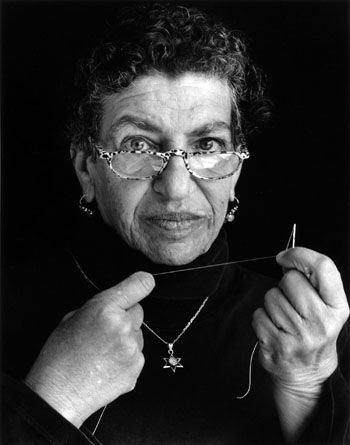
A portrait by Judy Dater
A portrait by Judy Dater.
Judy Dater:
I like expressing emotions—to have others feel what it is I’m feeling when I’m photographing people. [...] I think photographing people is, for me, the best way to show somebody something about themselves—either the person I photograph or the person looking—that maybe they didn’t already know. [...] I feel like I’m attending to people when I’m photographing them.

 Pete Docter:
I make art primarily because I enjoy the process. It’s fun making things.
And I’m sure there is also that universal desire to connect with other people in some way, to tell them about myself or my experiences. What I really look for in a project is something that resonates with life as I see it, and speaks to our experiences as humans. That probably sounds pretty highfalutin’ coming from someone who makes cartoons, but I think all the directors at Pixar feel the same way. We want to entertain people, not only in the vacuous, escapist sense (though to be sure, there’s a lot of that in our movies too), but in a way that resonates with the audience as being truthful about life—some deeper emotional experience that they recognize in their own existence. On the surface, our films are about toys, monsters, fish, or robots; at a foundational level they’re about very universal things: our own struggles with mortality, loss, and defining who we are in the world.

An image from “The Problem of Possible Redemption 2003,” staged at the 2004 Whitney Biennial in New York. The video is an adaptation of James Joyce’s novel Ulysses shot at the Parkville Senior Center in Connecticut, with the seniors reading the lines from cue cards.
An image from "The Problem of Possible Redemption 2003," staged at the 2004 Whitney Biennial in New York. (Harell Fletcher)
Harrell Fletcher:
By the time I got to graduate school, I was not so interested in making more stuff, and instead started to move into another direction, which these days is sometimes called “Social Practice.” [...] I think of it as the opposite of Studio Practice—making objects in isolation, to be shown and hopefully sold in a gallery context. Most of the art world operates with this Studio Practice approach. In Social Practice, there is more of an emphasis on ideas and actions than on objects; it can take place outside of art contexts, and there is often a collaborative or participatory aspect to the work. So back to the question why I make art. In my case, the projects that I do allow me to meet people I wouldn’t ordinarily meet, travel to places I wouldn’t normally go to, learn about subjects that I didn’t know I would be interested in, and sometimes even help people out in small ways that make me feel good. I like to say that what I’m after is to have an interesting life, and doing the work that I do as an artist helps me achieve that.

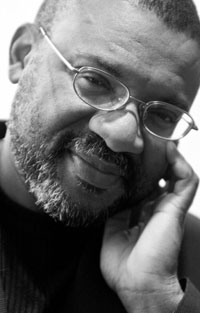
Kwame Dawes
Kwame Dawes:
I’m trying to capture in language the things that I see and feel, as a way of recording their beauty and power and terror, so that I can return to those things and relive them. In that way, I try to have some sense of control in a chaotic world.
I want to somehow communicate my sense of the world—that way of understanding, engaging, experiencing the world—to somebody else. I want them to be transported into the world that I have created with language.

James Sturm:
I like the question “Why Do You Make Art?” because it assumes what I do is art. A flattering assumption. [...] Whatever the reason, an inner compulsion exists and I continue to honor this internal imperative. If I didn’t, I would feel really horrible. I would be a broken man.

KRS-One:
I was born this way, born to make art, to make hip hop. And I think I’m just one of the people who had the courage to stay with my born identity. Hip hop keeps me true to myself, keeps me human. Hip hop is the opposite of technology. Hip hop is what the human body does: Breaking, DJing, graffiti writing. [...] The manipulation of technology is what humans do, that’s art.
Or take graffiti writing. Put a writing utensil in any kid’s hand at age two or three. They will not write on a paper like they’ll later be socialized to do, they will write on the walls. They’re just playing. That’s human.
Now go read the rest of the article, get inspired -- then come back and tell us why YOU make art!

Wednesday, May 22, 2013

The Militant Baker: Sticking It to Abercrombie and Fitch, Awesome Style


You may have seen these pictures percolating through the Internet recently:


That would be Jes, of Militant Baker fame, in a photo series she created with Liora K Photography in response to Abercrombie & Fitch CEO Mike Jeffries' comments regarding his distaste for fat people wearing his brand. I happen to be so lucky as to know this incredible woman, and watching this photo series and the attached open letter to Mike Jeffries explode across the world of the Internet is an absolutely surreal experience, and I am SO thrilled for her. I definitely recommend reading her entire post -- because it's AMAZING -- but here's the big takeaway from her letter that makes me love this so much:
I didn't take these pictures to show that the male model found me attractive, or that the photographer found me photogenic, or to prove that you're an ostentatious dick. Rather, I was inspired by the opportunity to show that I am secure in my skin and to flaunt this by using the controversial platform that you created. I challenge the separation of attractive and fat, and I assert that they are compatible regardless of what you believe. Not only do I know that I'm sexy, but I also have the confidence to pose nude in ways you don’t dare. You are more than welcome to prove me wrong by posing shirtless with a hot fat chick; it would thrill me to see such a shoot.
I'm sure you didn't intend for this to be the outcome, but in many ways you're kind of brilliant. Not only are you a marketing genius (brand exclusivity really is a profitable move) but you also accidentally created an opportunity to challenge our current social construct. My hope is that the combination of these contrasting bodies will someday be as ubiquitous as the socially accepted ideal.
Being true to yourself looks pretty damn hot.
 Why am I posting about this here? Because in a week where we're talking about mapping your creative DNA to discover what makes you tick, Jes is a perfect example of what you are capable of when you go where your interests lead you. As a body positivity activist, photographer, and blogger, with her previous work includes such awesomeness as The Body Images Project, Jes is a woman who's following her passions all the way to the Today Show and beyond.

And after all, that's what living a creative life is all about, right? Using your passions to show you the way -- and sometimes, just sometimes, finding out that where they take you goes beyond your wildest dreams. Congrats to Jes, and just because it makes me so darn happy, here's one more Attractive & Fat image for your viewing pleasure: